Engobes or pigments in pottery
Today our master Inessa shares her tips on how to add color to raw clay pieces.
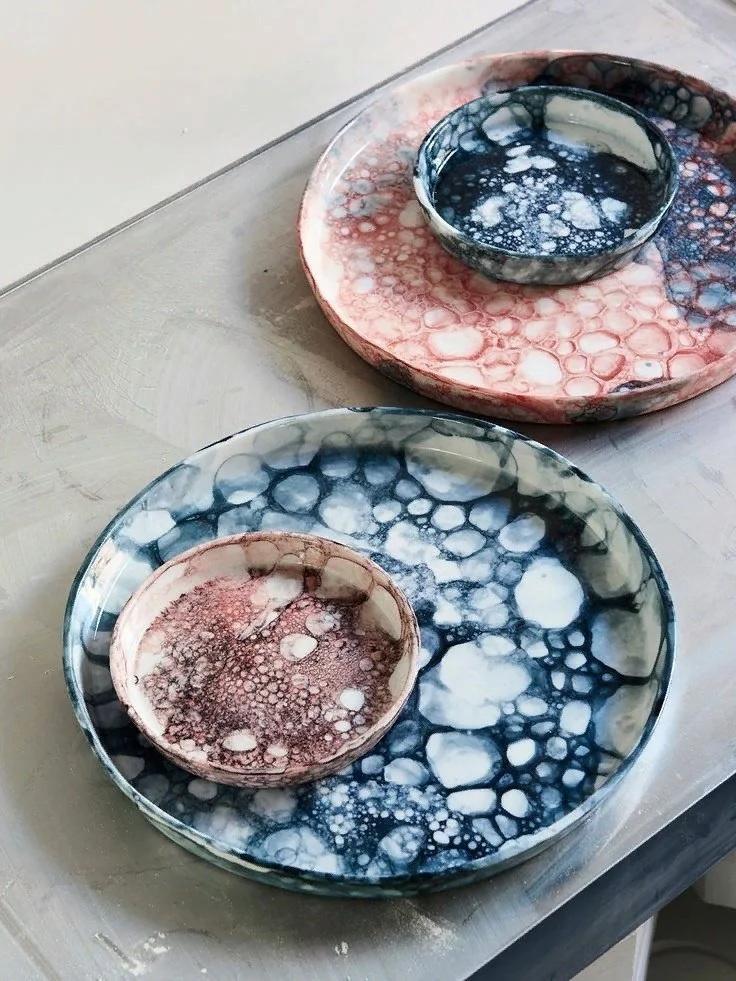
Paints used on raw clay are called angobes. Besides pigment, they also contain clay, which helps the color stick during firing. You can easily make angobe yourself: take a small amount of pigment and mix it into slip (it’s best to use the same clay as your piece). And that’s it—your homemade angobe is ready.
When working with paints on raw clay, it’s important to consider the density of the clay. Inessa always reminds students about this, because it makes applying the paint much easier.
Unlike paper or cardboard, raw clay hardly absorbs paint. Because of this, if you move the brush back and forth, the paint doesn’t stay in place—it just gets pushed around, leaving uneven spots.
To avoid this, there are three main rules.
First, choose the right brush. A fan brush works best, so the pressure is very light and doesn’t leave marks.
Second, as Inessa explains in her classes, the first layer of paint works more like a base or primer. After that, you add one or two more layers.
After the first layer, dry the piece slightly with a hairdryer so the paint sets a bit (just don’t overdry it). Then apply another thinner and more careful layer.
Third rule: just like with regular painting, if you want an even finish, apply each layer in a different direction so they overlap.
These rules work well for covering the whole piece or large areas. For small details, the same method can be used, but it’s less critical.
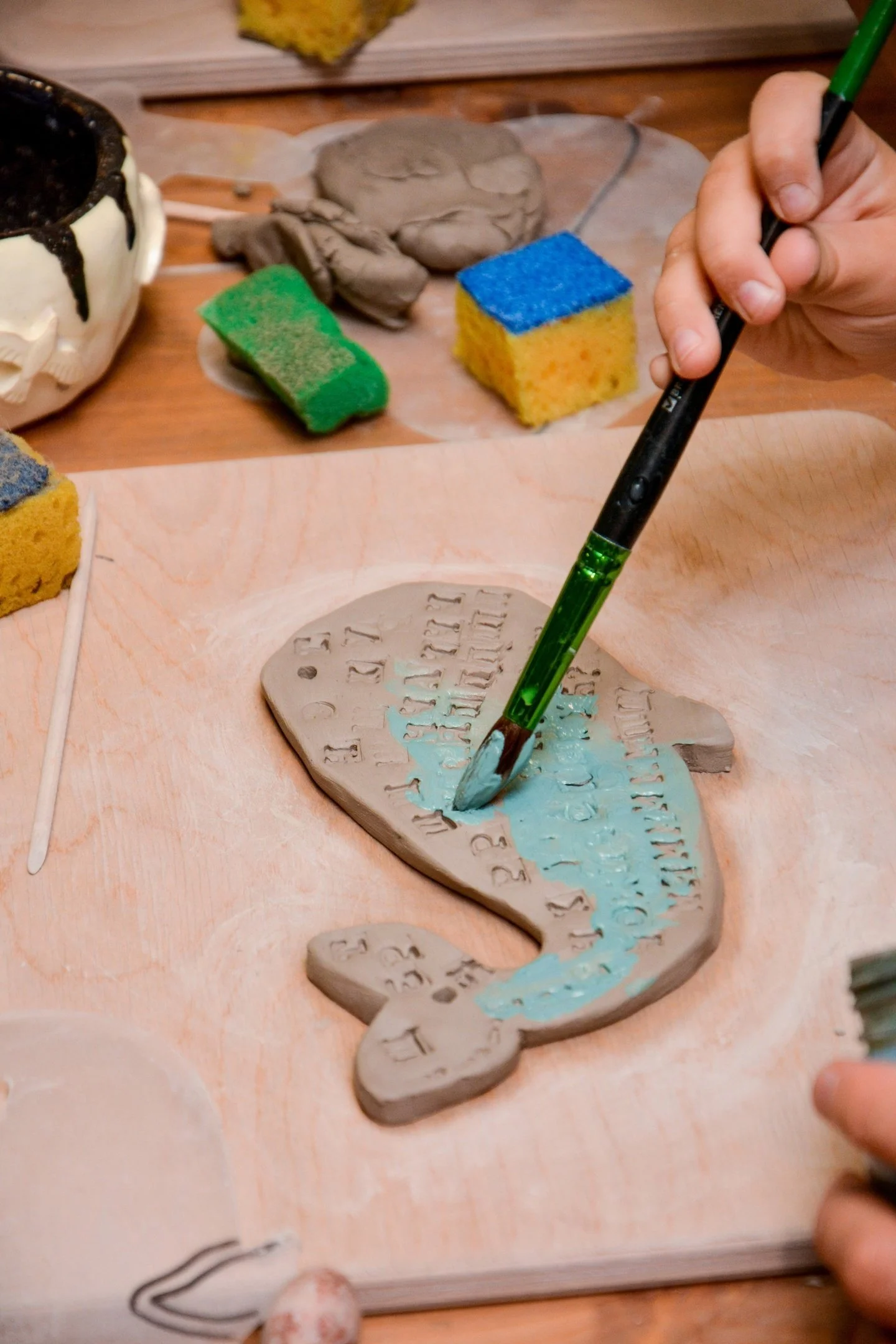
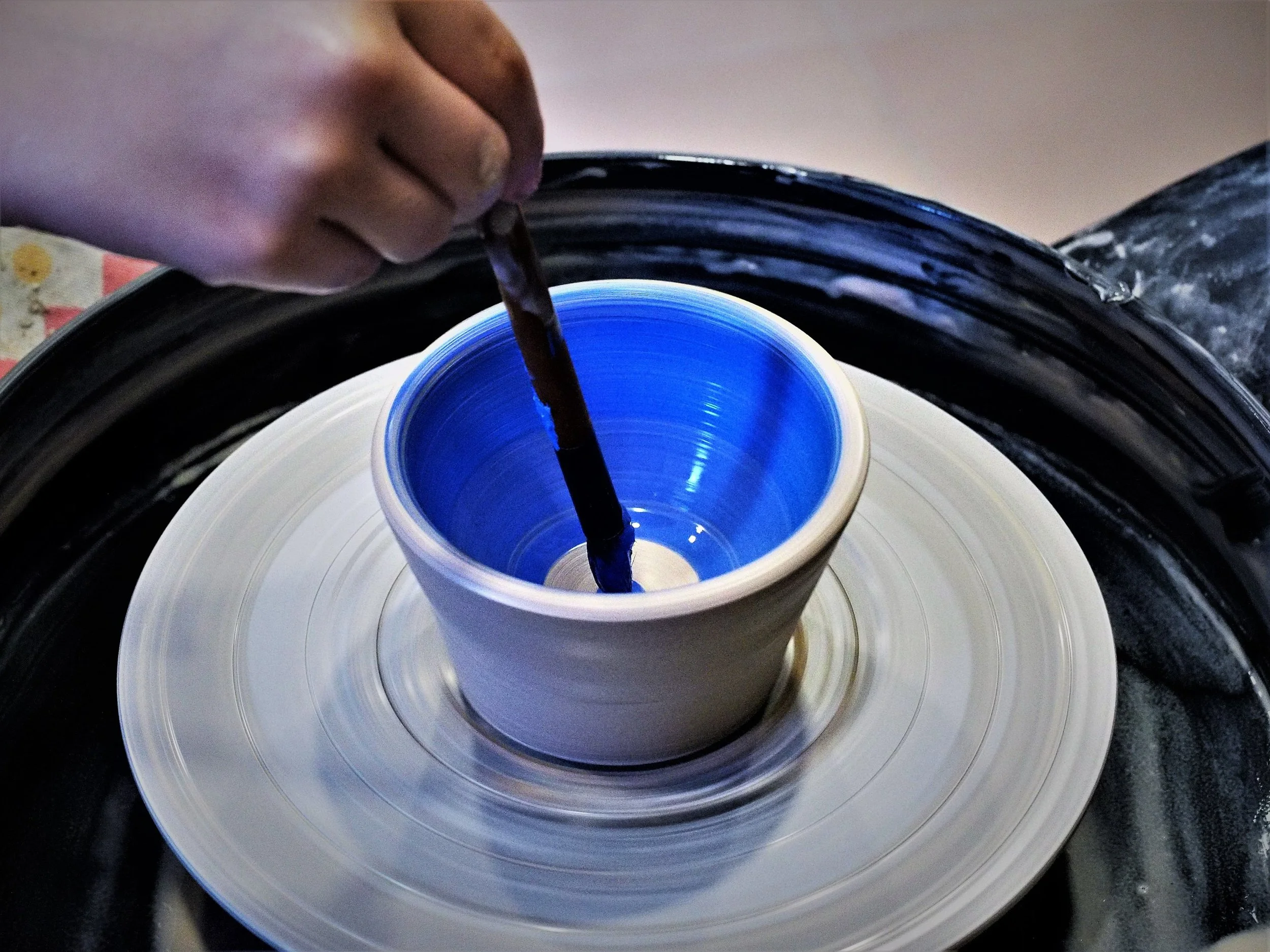
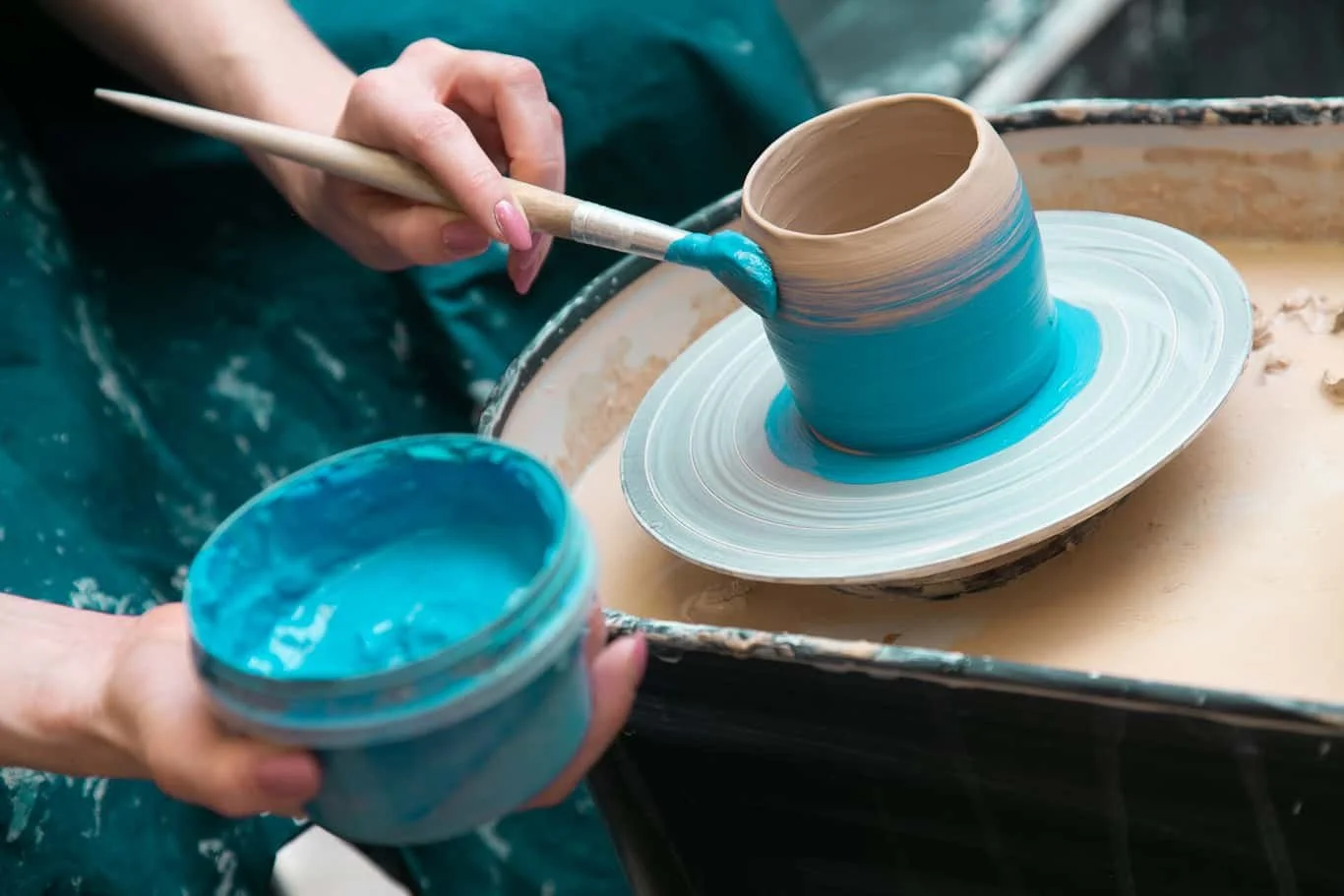
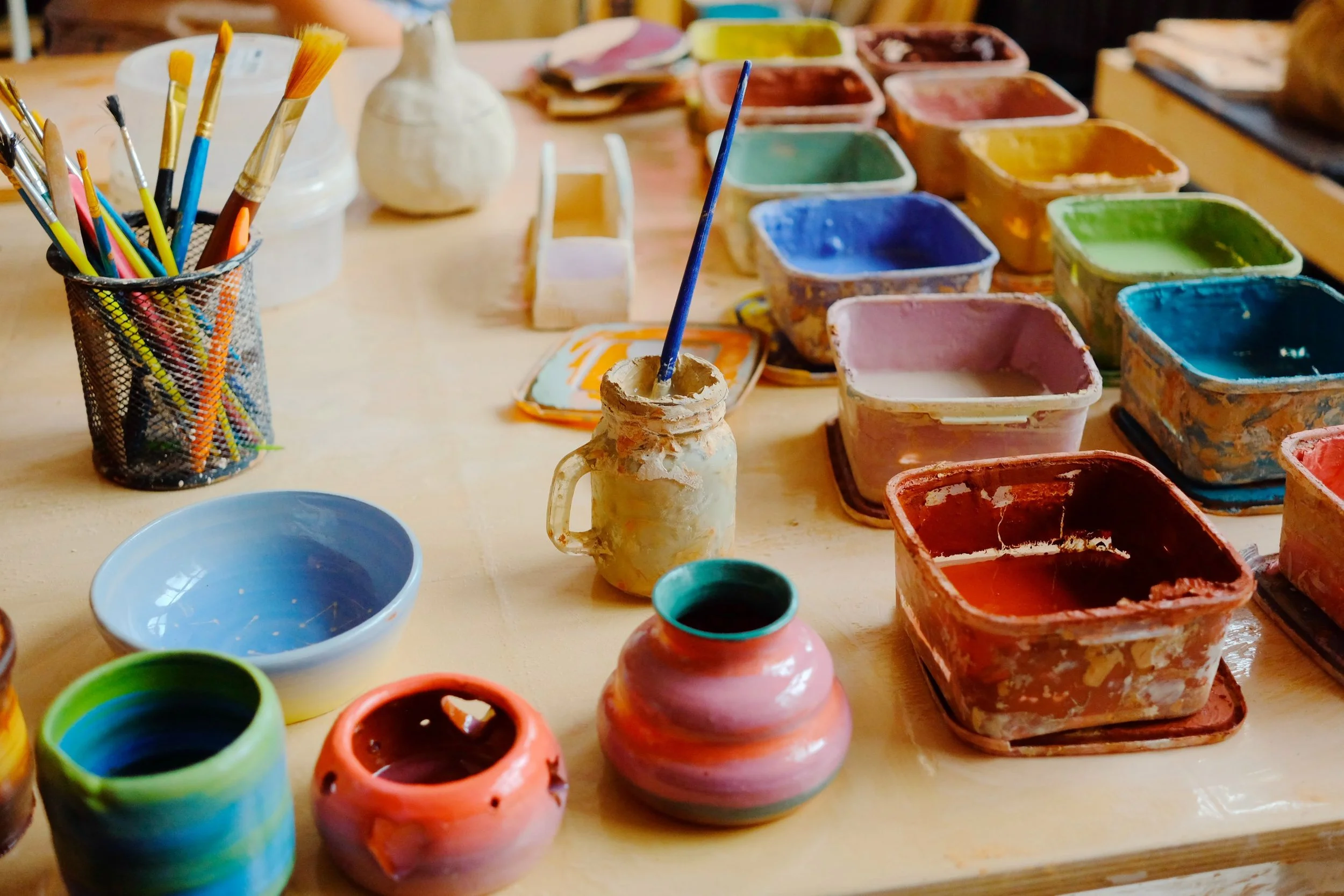
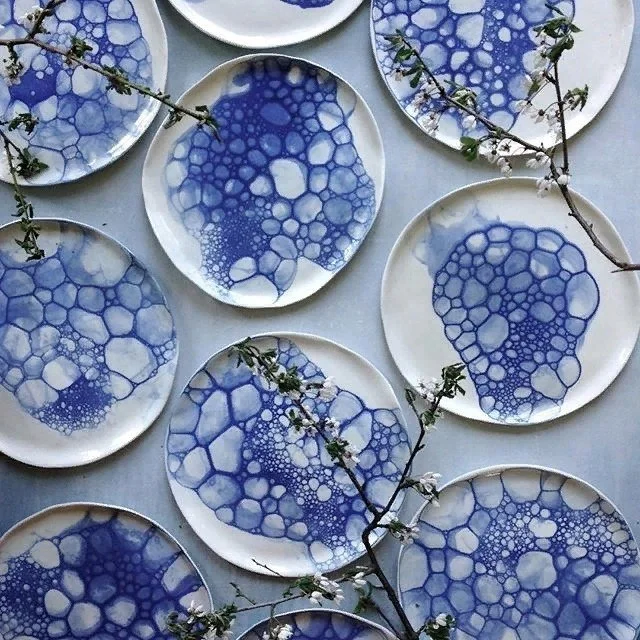
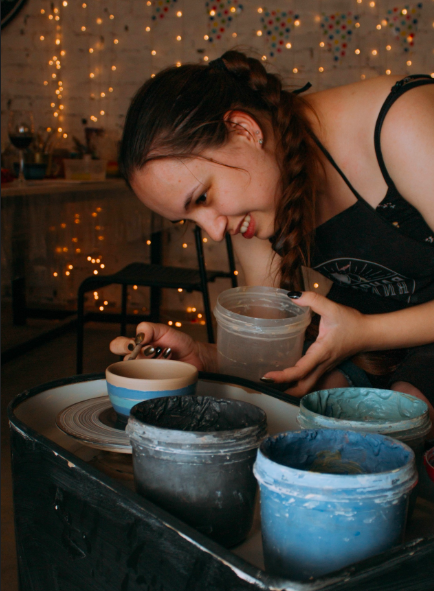
“The first layer of paint works more like a base, on top of which we apply another layer.”
Clara Moreau is a ceramic artist based in Montreal. She studied pottery in France, where she developed a minimalist and material-focused approach. Now she runs a small studio, teaches beginners, and creates handmade ceramics for local cafés.